
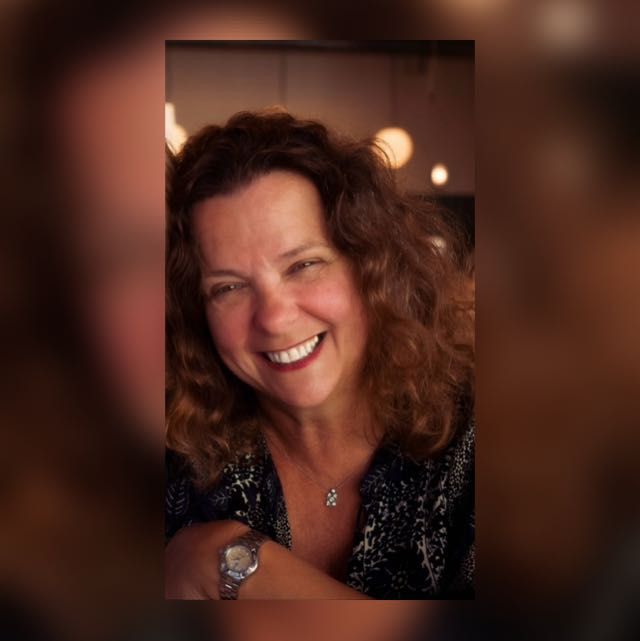
Getting to know jannette before her stroke
Before her stroke, Jannette describes herself as hardworking, financially independent, busy and sociable. She lived life at full speed and, looking back, admits she probably felt invincible.
Her life had not been without challenges. She had experienced two marriages that ended in divorce. The first was an amicable separation due to an age difference between her and her husband. The second was far more difficult. After years of struggling to cope with her husband’s alcoholism, Jannette made the difficult decision to leave the marriage. The breakdown of the relationship was painful, involving emotional abuse and harassment after she moved out, which ultimately led to police involvement.
Despite these experiences, one thing remained constant: Jannette’s strength. She was determined enough to walk away from situations that no longer made her happy, showing a resilience and independence that would later prove invaluable in facing the challenges that lay ahead.
Jannette was 57 years young when she experienced her stroke, and before the stroke happened she was feeling very tired all of the time, constantly felt dizzy, and she was sleeping more frequently than usual.
Jannette remembers most of the night before her stroke. It was New Year’s Eve 2022, and she was staying at her then partner’s house. The pair spent the evening watching television together, including the annual Jules Holland music programme.
She went to bed shortly before her partner. Although she has no memory of it herself, she was later told that she had mentioned feeling “a bit rough” before heading to bed – a seemingly insignificant comment that would take on much greater meaning in the hours that followed.
We asked Jannette “How did you realise something was wrong?” and her reply was “I was woken up by my partner on New Year’s Day 2023, saying I’d been asleep for over 20 hours and he thought I was having a stroke. He’d tried to call an ambulance and waited 40 mins so gave up. I said I was ok; I just felt really tired and heavy and that I wanted to go back to sleep. He wouldn’t have it, so I suggested he tried to call 111 and after approximately another 30-40 minutes, he got through. I called out the dog’s name who was at my feet on the bed, but my words felt slow and slurred, so I may have had aphasia. When we got through to 111, my partner spoke to the operator, who was then put on speaker phone and she suggested she thought I was having a stroke and that the paramedics were on their way.”
The Immediate Aftermath
In the immediate aftermath of Jannette’s stroke, she was overwhelmingly exhausted. Rather than processing the enormity of what had happened, her mind was focused solely on rest. The diagnosis itself hadn’t fully sunk in; she was simply too tired to comprehend the life-changing news she had just received
Jannette says her family and friends were understandably panicked, although they tried to remain calm. Despite the frightening situation, she was remarkably clear-headed. She remembers telling her partner where her will was, giving him the code to her phone and explaining who needed to be contacted.
As the stroke unfolded, Jannette experienced a strange sense of detachment. She felt as though she was on the other side of the room, despite being in bed by the bedroom door. She also recalls feeling as though she had slept heavily on her right side and was under a blanket or cloud, yet at the same time she retained a sense of clarity about what was happening around her.
In the days and weeks following her stroke, Jannette faced a series of difficult physical and emotional challenges. She struggled with double vision and frequently bumped into objects on her left side. Extreme fatigue also became a major issue, with her needing to sleep every 80 minutes or so.
After spending a week in hospital, the reality of what had happened only truly sank in when she returned home. Before being discharged, she underwent assessments to ensure she could manage everyday tasks such as making a cup of tea, preparing toast, using the microwave and navigating the stairs independently.
However, the emotional impact proved to be the greatest challenge. Jannette says she felt largely alone, as her partner was unable to provide the emotional support she needed and avoided confronting the situation. Feeling unable to cope while trying to hold everything together, she ended the relationship and, shortly afterwards, suffered a nervous breakdown.
Jannette’s treatment began almost immediately after she arrived at hospital. Her best friend, who is a former nurse, arrived during the stroke and stepped in to support her after receiving her partner’s agreement to help.
She spent around nine and a half hours in A&E, where she underwent an MRI scan. Before the scan, she was given an anti-sickness injection and had to wait for it to take effect. She was then transferred to the stroke ward, where she shared a room with one other patient. During her stay, she had an intravenous line inserted into her arm, believed to contain saline solution, and was connected to monitors to keep track of her heart.
Although she has little memory of it, Jannette was later told that she became emotional and cried while with her partner in her hospital room. She was regularly monitored by staff, encouraged to drink more water due to episodes of low blood pressure and received meals at the usual times. She also recalls undergoing a CT scan the following day, remembering the sensation of being wheeled there as though she were “in a wheelbarrow”.
Throughout her hospital stay, the support of those closest to her remained a comfort, with friends visiting her as she began to come to terms with the enormity of what had happened.
Recovery Journey
We asked Jannette “What aspects of recovery did you find the most difficult?“
For Jannette, the most difficult aspects of recovery were not only physical but deeply emotional. She struggled with unsteadiness and frequently walked into things, but the overwhelming fatigue proved especially challenging. Having always been a busy, independent person, she found it incredibly difficult to adjust to a body that constantly demanded rest.
The emotional impact of her stroke was even harder to bear. Jannette felt unsupported by her partner, who she says struggled to engage with what she was going through, leaving her feeling isolated during one of the most vulnerable periods of her life.
She also battled severe mental health challenges, including a nervous breakdown, depression, anxiety and suicidal thoughts. At times, she says she felt trapped within her own body, with the combination of exhaustion and anxiety becoming almost unbearable. The fatigue and depression were so overwhelming that all she wanted to do was shut down and withdraw from the world around her.
Despite the challenges she faced, Jannette found motivation in her innate determination to survive and recover. She says the body has “an amazing way of wanting to survive”, and this resilience helped carry her through some of her darkest moments.
Seeking support also played a vital role in her recovery. Jannette underwent both trauma and psychodynamic therapy to help her process her experiences and rebuild emotionally. In addition, she invested in herself by paying for a 12-week online Life Empowerment Programme, which helped her manage her anxiety and regain a sense of control over her life.
For Jannette, recovery was not just about healing physically – it was also about finding the right tools and support to recover emotionally and rediscover her strength.
Although Jannette’s fatigue finally lifted in October 2025, she says she is only just beginning to feel like herself again. The impact on her mental health was significant, and while she still experiences the occasional “wobble” moment, she is learning to manage and cope with these challenges.
Throughout her recovery, Jannette has also found comfort in her creativity. An artist with a passion for painting, she uses art as a way to distract her mind, process her emotions and bring herself a sense of calm. Painting has become an important outlet, helping her focus on something positive as she continues her journey towards recovery and a new sense of normality.

Another question we asked Jannette was “What achievements during your recovery are you most proud of?” and she came back with a very powerful and inspiring answer.
“I am proud of close family and friends who were there for me throughout. They’ve been amazing and have kept me going…
I’m proud that I have managed to find coping methods and keep researching for solutions to feel normal again…
I’m proud that I have managed to get a volunteer role for 1.5 years, that helped me understand my worth and enjoy a team community spirit…
I am proud that I wanted to find a part-time job and get paid for my work…
I am proud that on the days I feel scared to do things, I push forward to see the better picture on the other side…
Most of all, I am proud to have been strong throughout this horrific experience.
Life after her stroke
Jannette’s stroke was caused by a hole in her heart, known as a patent foramen ovale (PFO), which allowed a blood clot to travel to her brain and cause an infarct in her thalamus. The experience forced her to confront her own mortality in a way she never had before.
Since her stroke, her outlook on life has changed significantly. She says she now understands just how precious life is and hopes to move forward by focusing on being healthy and happy for the next 30 years and beyond.
The experience has also made her stronger. Jannette has become more selective about where she invests her time and energy, choosing to focus on the things that truly matter. She has also learned, despite finding it incredibly difficult at times, to be more patient and to embrace a slower, fuller pace of life, making the most of the days she has when she is not working.
Following surgery to close the hole in her heart, Jannette feels physically and emotionally stronger. When asked whether there are things she can do now that doctors may not have been sure she would be able to do, her answer is simple but powerful: she believes she has come away with a stronger heart and a stronger mind.
Jannette answered our question “Has the experience changed your outlook on life?” with passion. She said the experience has profoundly changed her outlook on life. She says she has learned not to take on the responsibility of fixing things that do not require her involvement, choosing instead to protect her own peace and energy.
She has also learned to live in the present, taking life one day at a time and, on some occasions, one moment at a time. After everything she has been through, she has developed a greater appreciation for the here and now.
Perhaps most importantly, Jannette has learned to put her own happiness first. While she remains a kind and caring person, she no longer feels the need to sacrifice her own wellbeing for others and has become far more selective about who and what deserves her time and energy.
Emotional Impact
“Jannette…what would you say to someone who feels isolated after a stroke?” “Use every bit of help you are offered. The Stroke Association is great too. Keep in communication with people, especially if you don’t have a partner. Take each day slowly and gradually and sleep when you need to. Make sure you feel financially secure and ask for help if needed. You need to feel safe and secure to keep going. Try to focus on music, creativity or nature to help grow new neurons in your brain. Being happy helps your dopamine levels which is good. Don’t give up. Have patience.”
Today, Jannette is most grateful for being alive and in control of her future, although she is currently taking things day by day. However, she feels that she is getting stronger.
She’s also incredibly grateful for having such supportive friends and family who have been there throughout her journey, and she’s thankful to her therapist, who she completed her therapy with in May 2026 after seeing her for almost 3 years.
Her advice to someone who has recently suffered a stroke is “don’t give up, have patience.”
The last question we asked Jannette was “If you could go back and speak to yourself on the day of your stroke, what would you say?“. Jannette said “Take note and get checked out when the signs may be there beforehand.
Make sure the hospital talks to your GP immediately to check if you’re on any medication- mine didn’t!”
Jannette’s words above serve as a powerful reminder of the importance of listening to our bodies and advocating for our own health. Her journey has been one of immense challenges, from physical recovery and overwhelming fatigue to battles with her mental health, but it has also been a story of remarkable resilience, strength and self-discovery. Today, she continues to embrace life at a slower pace, finding joy in painting, valuing what truly matters and moving forward with a stronger heart and mind. By sharing her story, Jannette hopes others will recognise the signs of stroke, seek help when something doesn’t feel right and know that, even after life’s darkest moments, recovery and hope are possible.