
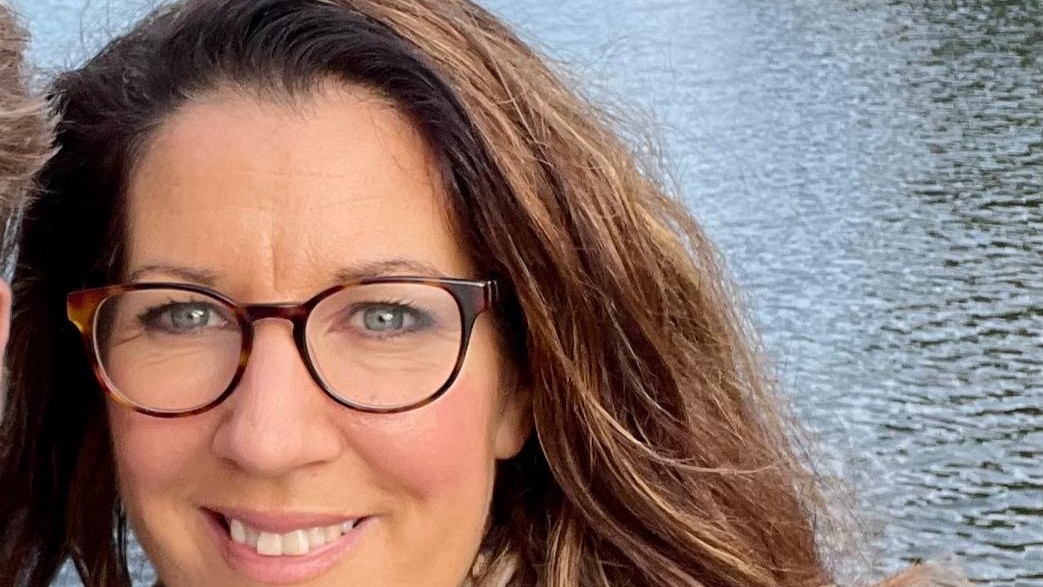
About rae
This is Rae! When Rae first noticed an intense pain in her right breast after a long drive, breast cancer wasn’t the first thing on her mind.
At 53, the married mum of two had spent her career caring for others as a nurse, working in community and palliative care before progressing into a demanding management role. Life was hectic, balancing an all-consuming career with raising two teenage children, and like many women, she never imagined how quickly everything could change.
Diagnosis
“I went to my GP because the pain had become almost unbearable whenever I wore a seatbelt,” Rae recalls to us. “The GP couldn’t feel a lump but suggested I have a precautionary scan.”
Confident that everything would come back clear, Rae attended the appointment expecting reassurance. Instead, after a mammogram and multiple biopsies, she left knowing something wasn’t right.
A few days later, the devastating diagnosis arrived.
The tumour had consumed the majority of her right breast, and doctors told her she would need a mastectomy. Despite the shock, Rae says her background in nursing helped her remain optimistic. “I knew that if I stayed positive, my family would cope too. I genuinely believed it was treatable.”
Treatment & Reconstructive Surgery
But there was one thing Rae couldn’t ignore… a nagging instinct about her left breast.
Years earlier, she’d undergone a lumpectomy on that side and couldn’t shake the feeling that something wasn’t right. Rae fought to have both breasts removed, despite initial reluctance from her medical team. However, eventually they agreed to do the surgery.
Although she’d always assumed she wouldn’t worry about reconstruction, the reality proved different. “I wanted to retain a feminine figure. From my experience as a nurse, I’d seen that prosthetic bras could be uncomfortable and cumbersome.”
After considering several options, Rae chose an intricate TUG flap reconstruction, where surgeons use tissue from the thighs and buttocks to create new breasts. It was a major operation lasting around 12 hours, involving both an oncology surgeon and a plastic surgeon. The procedure required surgeons to reconnect tiny blood vessels deep within her chest and even remove a small section of rib to access them.
As the surgery approached, Rae’s professional knowledge made her increasingly aware of the risks. “The night before surgery, I wrote individual letters to each member of my family in case I didn’t survive.” Thankfully, the operation was a complete success.
Recovery, however, was anything but easy.
“The pain from my thighs and buttocks was incredibly difficult. Sitting and walking were extremely painful, and I developed wound infections that delayed my healing.” Yet despite everything, Rae has no regrets. “I was so pleased with the reconstruction. My new breasts were great — and pert for the first time in years! It gave me confidence and really helped my emotional recovery.”
Then came the news that proved her instincts had been right all along.
During surgery, doctors discovered a second, unrelated cancer in her left breast. More aggressive than the first, it had developed independently and had gone completely undetected. “The most comforting part of the whole process was knowing I’d trusted my gut. Had I not fought for a bilateral mastectomy, they may not have found it until much later.”
Life after surgery
While Rae coped remarkably well with the diagnosis and physical recovery, the greatest challenge came months later. Six months after surgery, she attempted to return to her senior nursing role while beginning hormone treatment that immediately forced her into menopause.
Because her cancer was oestrogen-receptive, the medication blocked oestrogen production almost overnight. “I wasn’t peri-menopausal, so the shock to my body was immense.” The hormonal changes triggered severe anxiety, and within a week of returning to work, Rae suffered a panic attack that forced her to take another four months off.
Cancer counselling helped her process an unexpected grief — not only the trauma of cancer itself but accepting that she could no longer continue in the senior role she’d spent her career working towards. “It meant stepping away from a role that had become a huge part of my identity.” The impact extended far beyond work.
The loss of income placed enormous financial pressure on the family, eventually forcing them to sell their home. “It was one of the most stressful periods of my life.” Looking back now, four years later, Rae sees her diagnosis through a different lens.
“What felt like everything falling apart actually became a wake-up call.”
She left behind the relentless pace of her previous career and found a nursing role that finally offered the work-life balance she’d been missing. Instead of working endless hours, she was able to be there for her daughter during her A-levels, spend more time with her family and appreciate the everyday moments she’d once rushed past.
With another year of hormone therapy remaining, fatigue continues to affect her daily life, and because hormone replacement therapy isn’t recommended after oestrogen-receptive breast cancer, she’s had to navigate menopause without it.
“It’s been tough,” she admits. Despite everything she’s endured, Rae says the experience has fundamentally changed her outlook on life.
Advice & Reflection
“My biggest piece of advice is to trust your instincts. You know your own body better than anyone, so don’t be afraid to speak up if something doesn’t feel right.”
She also hopes people understand that cancer doesn’t always end when treatment does. “The diagnosis and treatment are one thing, but sometimes it’s the indirect consequences that are the hardest. I never imagined cancer would cost me my career and my home.”
Today, though, Rae chooses to focus on what she gained rather than what she lost.
“I truly live life to the fullest now. Work is just one part of life, not all of it.”
Her journey is a powerful reminder that listening to your body can be life-saving, and that even after unimaginable hardship, it’s possible to rebuild a life that’s richer, slower and centred around what really matters.