

Getting to Know Katie
Katie is 21 years old and has just graduated from Glasgow Caledonian University with a First Class Honours degree in Applied Psychology, specialising in Forensic Psychology.
Originally from the tiny island of Lismore on Scotland’s west coast, she now lives in Carradale, Kintyre, with her boyfriend while navigating life after university and exploring her next career steps.
Outside of PMDD advocacy, Katie enjoys spending time outdoors, going for coffee and brunch dates, and visiting her large family back home in Lismore.
A huge part of Katie’s life is raising awareness of PMDD on social media. Although she kept her experiences private for many years, she began speaking publicly about PMDD in September 2025. Since then, sharing her journey has connected her with an incredible community and highlighted the need for greater understanding, information, and hope for those affected by PMDD.
For those of you who aren’t aware of what PMDD stands for, it’s known as Premenstrual Dysphoric Disorder. Katie has explained in her own words what PMDD is, so continue reading to understand how it can affect teenage girls and women.
Katie was diagnosed with PMDD when she was 19 years old, but looking back, she had been experiencing symptoms since her early high school years – long before she knew what PMDD was.
For years, Katie knew that something didn’t feel right, but she couldn’t explain why. She often felt different from everyone else and sometimes even believed there was something wrong with her. What made it even harder was that these feelings weren’t there all the time. Some days she felt completely like herself, while at other times she felt overwhelmed and unable to understand why.
Eventually, Katie reached a point where she knew she needed help and couldn’t continue struggling in silence. When she and her healthcare professionals started looking at the pattern of her symptoms, PMDD was identified as a possibility. In fact, she was diagnosed on the very same day she first heard of PMDD.
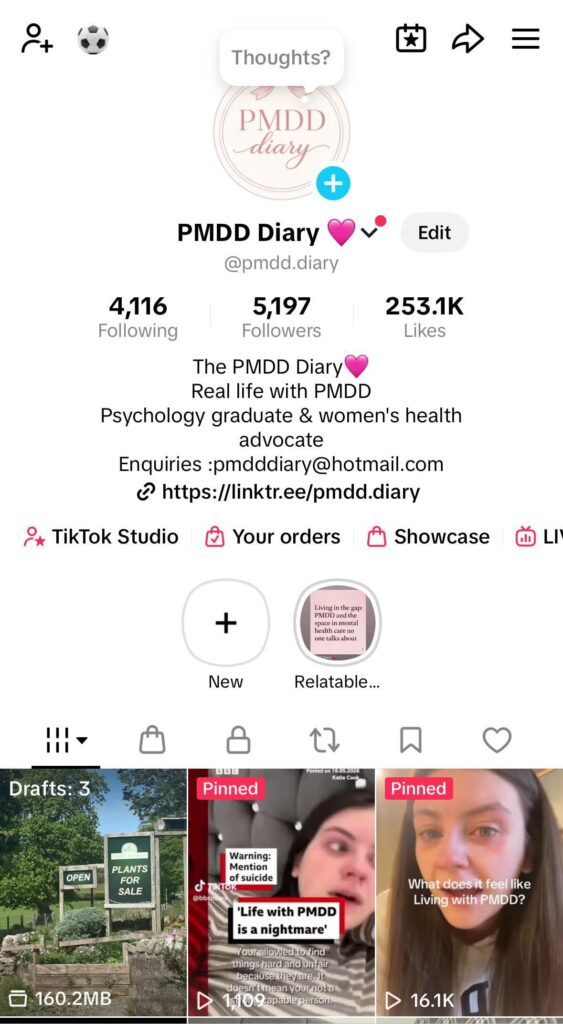
Although the diagnosis itself came quickly, getting to that stage had taken years. Living for so long without answers left Katie feeling isolated and confused, which is why she is now so passionate about raising awareness and helping others feel less alone in their experiences. You can follow Katie on her Instagram page – The PMDD Diary, and also on her TikTok account where she has a huge following on both!
We asked Katie “Did you feel listened to by healthcare professionals during that process?” and her reply has shown that medical professionals don’t necessarily always consider PMDD as an option and just make assumptions that young women are going through hormonal changes and being a ‘typical female teenager’.
Katie answered “Growing up, I was prescribed different contraceptives and often told that I was hormonal, that I was a teenager, that school was stressful, and that being young was difficult. The message was often that I would grow out of it. While those things can absolutely be true, they never fully explained what I was experiencing.
The thing is, I had a good life. Of course school had its challenges and growing up isn’t always easy, but there wasn’t anything happening around me that could explain the severity of the emotions I was feeling. The hopelessness, anxiety, and emotional distress felt far beyond what people were describing as ‘normal teenage hormones’.”
Although Katie eventually felt listened to and supported once PMDD was recognised, it took years to reach that point. She believes there is still a lack of understanding of PMDD within healthcare and feels that greater awareness and education are needed. Katie has found that learning more about the condition and advocating for herself in appointments has helped, but she does not believe people should have to become experts in their own condition to be taken seriously.
Understanding PMDD
We asked Katie to explain PMDD in her own words for those who haven’t heard of the condition before, or would like to know more about it. “Her response hit the nail on the head” commented the Director of The Go Girl Society as she has also been diagnosed with PMDD herself and around the same time as Katie.
Katie replied “PMDD is often described as a severe form of PMS, but that doesn’t fully capture how debilitating it can be. For me, it’s like becoming a different person for part of every month. It affects how I think, feel, and function, and then often lifts again once my period starts. It can feel like losing yourself and then having to rebuild every single month.”

The physical symptoms and emotions of PMDD can be wild and different for each person who is suffering with the disorder. Emotionally, Katie experiences severe anxiety, low mood, irritability, feelings of hopelessness, and intense self-doubt. Physically, she experiences fatigue, bloating, sleep disturbances, and difficulty concentrating. “The emotional symptoms are often the hardest because they can completely change how I see myself and the world around me, and the significant emotional outbursts can make it really difficult to leave the house and live life normally.” Katie mentioned.
misconceptions of PMDD
Katie explained that one of the biggest misconceptions about PMDD is that it is simply “bad PMS” or feeling emotional before a period. In reality, PMDD is a serious hormone-related disorder that can severely affect mental health, relationships, education, and careers, and in some cases can be life-threatening.
Daily life and relationships
Another question we asked Katie was “How does PMDD affect your day-to-day life?“
Katie’s reply was touching:”PMDD impacts almost every area of my life. There are times when everyday tasks feel overwhelming, socialising becomes difficult, and I have to work much harder to manage my emotions and thoughts. It often feels like spending two weeks each month fighting against your own brain.”
Katie described PMDD as feeling torn between two opposing thoughts: one telling her to withdraw from the world and another pressuring her to keep going and meet everyone’s expectations. She explained that these thoughts feel completely real during a PMDD episode, even though she can often recognise how distorted they were once her symptoms have passed.
PMDD can also affect your work or career, and Katie explained to us how it affects her work life. Katie explained that PMDD had a significant impact on both her studies and her current job search. She often overworked herself during the times she felt well because she feared struggling when her symptoms returned, and she said that PMDD can make setbacks, such as job rejections, feel far more personal and cause her to question her abilities and achievements, despite successfully completing a First Class Honours degree, maintaining relationships, and advocating for a cause she cares deeply about.
Mental health
Katie answered our question “What do you wish people understood about the emotional side of PMDD and how does it affect your mental health?
Her answer was “PMDD has a significant impact on my mental health. During my luteal phase, I can experience intense anxiety, intrusive thoughts, feelings of worthlessness, and a sense of hopelessness that feels very real at the time. Then, once my period starts, those feelings often ease dramatically”.
She wishes for more people to understand that, although PMDD symptoms are influenced by hormonal changes, the emotions experienced are very real. She explained that people with PMDD do not choose to feel distressed or think negatively, and even when they recognise that their thoughts may be distorted, the pain and emotions remain genuine. Again, Katie talks a lot about this on her social media pages. Her account on Instagram and Tiktok is ‘PMDD Diary’.
Katie admitted that there have been times when PMDD has made her feel like giving up, particularly during severe luteal phases when she felt isolated and struggled to trust her own thoughts. She said that support from loved ones and the PMDD community, reminding herself that the feelings would pass, and recognising the good things in her life have helped her keep going and seek help when she needs it.
Coping & Support
Katie said that tracking her cycle has been one of the most helpful ways of managing her PMDD, as it helps her recognise when her symptoms are linked to her cycle and reminds her that difficult periods will pass. She also emphasised the importance of having supportive people around her.
We asked Katie “Have you found any treatments, lifestyle changes, or coping strategies that make a difference?” and she answered “I take an SSRI, and it has definitely helped to an extent. However, I do wish there were more direct treatments available for PMDD, as I had hoped it would make a bigger difference than it has.
When it comes to lifestyle changes, I struggle with consistency, especially when symptoms are at their worst. One thing I always try to do is get outside, even if it’s only for ten minutes. Sometimes I’ll take my Kindle and read, although my concentration isn’t always good enough for that. Other times, I’ll just go and sit by the beach for a while. It helps remind me that the world is so much bigger than what’s going on in my head at that moment.
I also make a point of reaching out to my family when I’m struggling. My partner is incredibly supportive and is always there to reassure me and help distract me from my thoughts, even when I keep coming back with negative responses. I’ve learned that sometimes you don’t need someone to fix things or find the perfect solution—you just need someone willing to sit with you through it. That kind of support can make a huge difference.”
The advice that Katie would give to those who think they may have PMDD is “Start tracking your symptoms and your menstrual cycle. If you notice a clear pattern, take that information to your GP. Most importantly, don’t dismiss what you’re experiencing. If something feels wrong, you deserve support and answers.”
looking forward
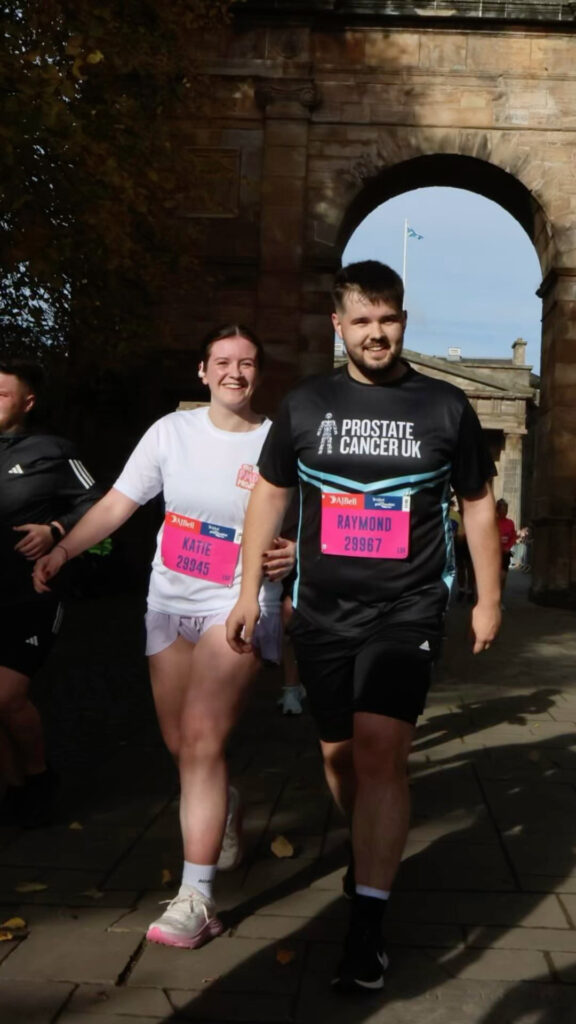
Katie said she would like to see greater awareness of PMDD, faster diagnoses, improved treatment options, and more specialist support and research. She believes that no one should have to spend years struggling to understand what is wrong with them.
The last question we asked Katie was “If you could tell every woman suffering in silence one thing, what would it be?“
Her answer was incredibly powerful, and we would like to thank Katie for being such an inspiration. The awareness she has spread so far about PMDD has touched many people and has made a lot of women realise that they’re suffering with the same condition. It makes women feel less alone so Katie – you’re amazing! You go girl!
Her answer was “You are not weak, dramatic, or failing. PMDD can make you question everything about yourself, but you are not the thoughts you have during your worst days. There are people who understand, there is support available, and there is hope, even when PMDD tries to convince you otherwise.”
If you think you may be suffering with PMDD and need someone to relate to – please go and follow Katie on her socials. She is incredibly friendly and welcoming.